
>>> READY TO SHIP PRODUCT
Cortical Excitatory Neuron Kit | ax5118

This product has been discontinued. We recommend using our axoCellsTM neural stem cells (ax0004).
• Derived from human iPSCs
• Convenient kit format containing cells, media, supplements and coating
• Assay-ready in 20 days
• Express over 12 of the key markers (including FOXG1, PAX6 and vimentin)
• Demonstrated functionality in advanced in vitro models including co-culture and tri-culture
Kit components
- axoCells Human iPSC-Derived Neural Stem Cells (≥1.5 million cells)
- Neural Maintenance Media (500 ml)
- Neural Plating Media (30 ml)
- NeurOne supplements A (1 ml) and B (1 ml)
- SureBond-XF coating (1 ml)
- BDNF (10 µg)
- SureBond-XF coating (1 ml)
Specifications
Number of cells ≥1.5 million cells
Donor Male, 74-year-old
Genetics Healthy control
Description
axoCells™ Human iPSC-Derived Cortical Neuron Cells, Media, Supplements and Coating kit containing axoCells Human iPSC-Derived Neural Stem Cells (≥1.5 million cells), Neural Maintenance Media (500 ml), Neural Plating Media (30 ml), NeurOne supplements A (1 ml) and B (1 ml), SureBond-XF coating (1 ml), BDNF (10 µg), and SureBond-XF coating (1 ml), optimized for maturation of cortical neurons for neuroscience research. NSCs made from iPSCs generated from a 74-year-old male donor’s pulmonary fibroblasts.
Key highlights include:
• Derived from human iPSCs
• Convenient kit format containing cells, media, supplements and coating
• Assay-ready in 20 days
• Express over 12 of the key markers (including FOXG1, PAX6 and vimentin)
• Demonstrated functionality in advanced in vitro models including co-culture and tri-culture
Please note: The ethical guidelines for the source material used to generate cell line ax7018 do not provide legal consent for, nor permit, sequencing of any derived cells or materials, including the following products: ax0018, ax0078, ax2508, ax2558, ax2518, ax2568, and ax3078.
Top Resources
Additional Information
Cortical Excitatory Neurons
Applications
Our axoCellsTM cortical excitatory neuron progenitors are suitable for investigating Alzheimer’s disease and for screening candidate therapies for this disease.
Healthy control lines are also available and can be used with high–content imaging, MEA, microfluidic and organ-on-chip (OOC) devices to measure structural and functional responses in neuronal models.
Protocols
Fully optimized cell culture reagents are available for the differentiation of progenitors into mature cortical excitatory neurons within 14 days. In addition, single media protocols, enabling co- and tri-culture of our cortical excitatory neurons with inhibitory interneurons, astrocytes and microglia provide convenient and fast culture solutions to better model human diseases in vitro.

Quality
We maintain or exceed industry-level quality with our ISO:9001-accredited production facility, guided by our rigorous quality control procedures and decades of scientific experience.
All cells come with a full Certificate of Analysis and are officially certified by HPSCreg®, to ensure ethical and biological conformity for your peace of mind.
Licenses & Consent
Axol has obtained all relevant licenses for reprogramming donor samples into iPSCs and differentiating these into cortical excitatory neurons for commercial use.
Patient samples used to create these neurons have been ethically sourced and consented for research and commercial use. All cells come with a full Certificate of Analysis and are officially certified by HPSCreg®, to ensure ethical and biological conformity for your peace of mind.
Publications
https://www.ncbi.nlm.nih.gov/pmc/articles/PMC7498259/
Garcia-Leon JA, Vitorica J, & Gutierrez A (2019). Use of human pluripotent stem cell-derived cells for neurodegenerative disease modeling and drug screening platform. Future Medicinal Chemistry, 11(11), 1305–1322. doi: 10.4155/fmc-2018-0520 [PubMed] [CrossRef] [Google Scholar]
Media and Reagents
Using NeurOne cortical neuron supplement, mature cerebral cortical excitatory neurons can be generated in 20 days. We also supply neural plating media, maintenance media and SureBond –XF coating as standalone items or as a kit.


Striatal Neurons
Data
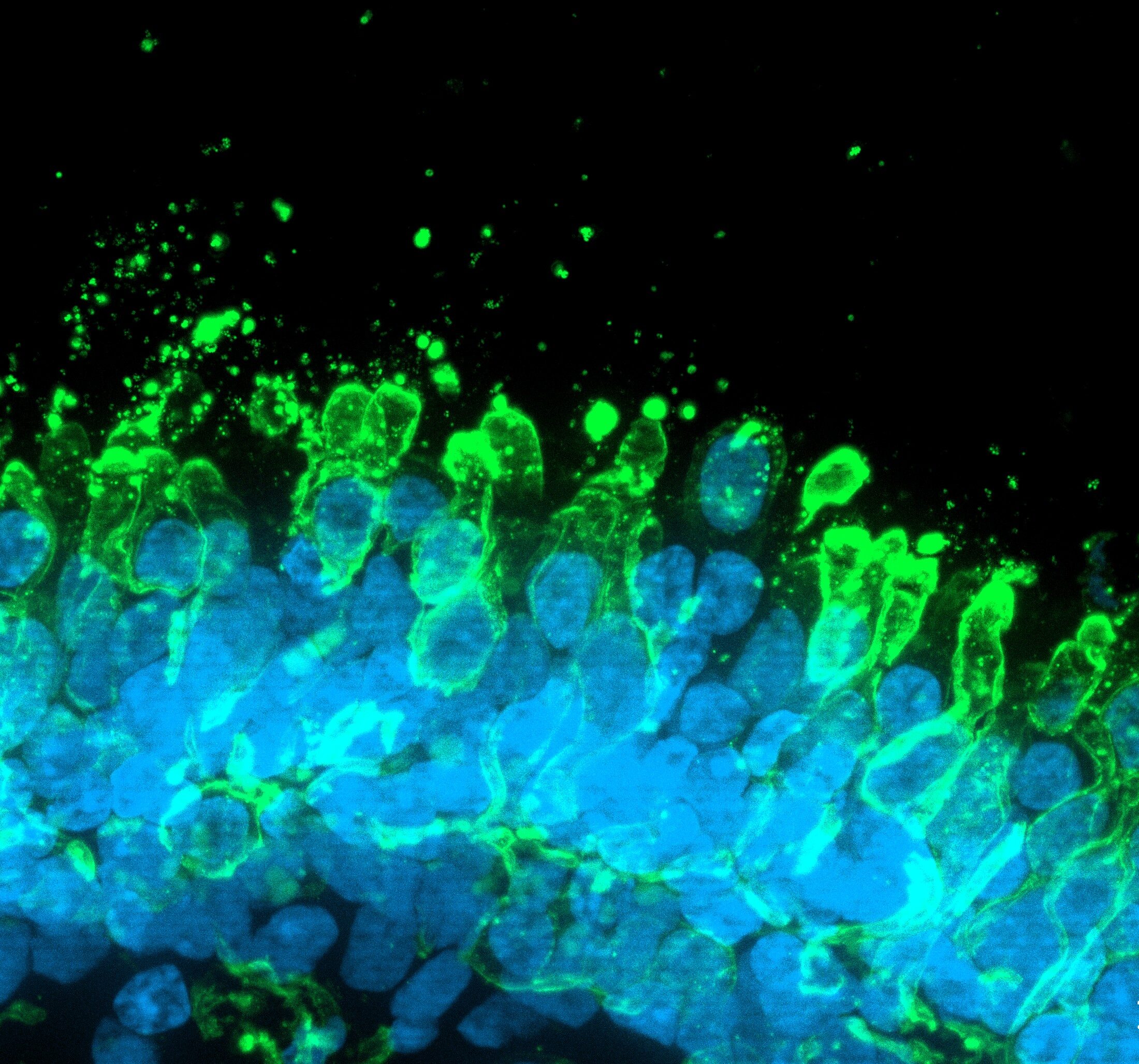
ICC images of differentiating striatal neural culture. Cells were fixed and stained on day 10, day 18 and day 33 for markers of striatal neurons (medium spiny neurons): DARPP32, CTIP2, CALBINDIN, GABA and MAP2.

Applications
Our axoCellsTM striatal neuron progenitors are suitable for investigating Huntington’s disease and for screening candidate therapies for this disease.
Healthy control lines are also available and can be used with high–content imaging, MEA, microfluidic and organ-on-chip (OOC) devices to measure structural and functional responses in neuronal models.
Protocols
Fully optimized cell culture reagents are available for the differentiation of progenitors into mature striatal neurons within 31 days. In addition, single media protocols, enabling co- and tri-culture of our striatal neurons with inhibitory interneurons, astrocytes and microglia provide convenient and fast culture solutions to better model human diseases in vitro.

Quality
We maintain or exceed industry-level quality with our ISO:9001-accredited production facility, guided by our rigorous quality control procedures and decades of scientific experience.
All cells come with a full Certificate of Analysis and are officially certified by HPSCreg®, to ensure ethical and biological conformity for your peace of mind.
Licenses & Consent
Axol has obtained all relevant licenses for reprogramming donor samples into iPSCs and differentiating these into striatal neurons for commercial use.
Patient samples used to create these neurons have been ethically sourced and consented for research and commercial use. All cells come with a full Certificate of Analysis and are officially certified by HPSCreg®, to ensure ethical and biological conformity for your peace of mind.
Publications
Glaser, T., Shimojo, H., Ribeiro, D.E. et al. ATP and spontaneous calcium oscillations control neural stem cell fate determination in Huntington’s disease: a novel approach for cell clock research. Mol Psychiatry 26, 2633–2650 (2021). https://doi.org/10.1038/s41380-020-0717-5
Mathkar, Pranav P. et al. ‘Characterization of Neurodevelopmental Abnormalities in iPSC-Derived Striatal Cultures from Patients with Huntington’s Disease’. Journal of Huntington’s Disease, vol. 8, no. 3, pp. 257-269, 20191 Jan. 2019 : 257 – 269. DOI: 10.3233/JHD-180333
Media and Reagents
Using our kit of specially formulated striatal neuron media ax0333, growth factors BDNF ax139800 and GDNF ax139855, and SureBond–XF coating, mature striatal neurons can be generated in 31 days. We also supply all reagents as standalone items.


