
iPSC-derived neurons and neuroinflammatory cells for advanced in vitro modeling
View all- Kits
- Cells
- Cells
- Kits
- Kits
- Kits
- Kits
- Supplements
- Supplements
- Cells
- Cells
- Kits
- Kits
- Kits
- Kits
- Kits
- Kits
- Kits
- Kits
- Cells
- Cells
- Cells
- Cells
- Cells


Human iPSC-derived models for neurodegeneration, neuroinflammation & preclinical drug discovery
Huntington’s disease
iPSC lines from five HD patients and one asymptomatic carrier. CENSOi019-B line (HTT: 14/127 CAG, now CAG143) displays instability in culture and is associated with accelerated disease onset. Striatal neurons derived from this iPSC line provide a model for longitudinal studies of repeat expansion and neurodegeneration and recapitulate key HD phenotypes: CAG instability, neurite pathology, and functional deficits.
ALS/MND
Mono- and co-culture models encompassing motor neurons and microglia from multiple ALS genotypes, including C9orf72, SOD1, and TDP‑43, consistently recapitulate key disease phenotypes such as neuronal hyperexcitability, altered firing, morphological changes and impaired microglial phagocytosis.
The PRISM ALS consortia is extending access to iPSC-derived cells from 14 sporadic disease lines to accelerate preclinical discovery.
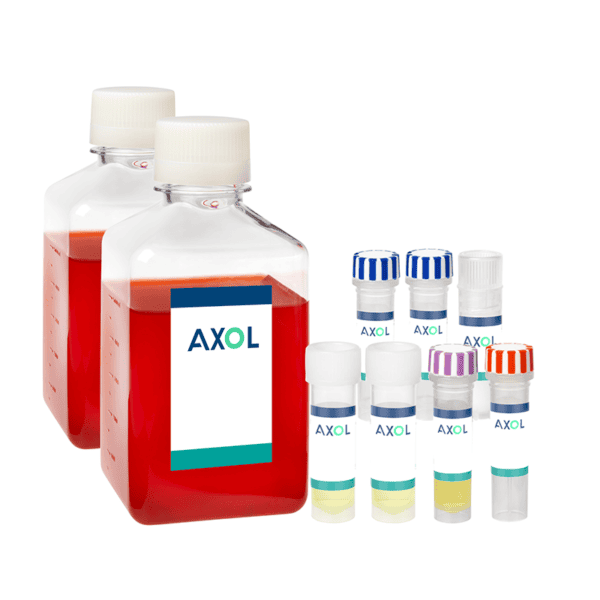
To support the study of neuron-glia interactions, Axol Bioscience has developed a range of human iPSC-derived co-culture kits comprising motor neurons, astrocytes and microglia in defined culture systems. The portfolio includes:
- axoCells™ human iPSC-derived motor neurons + microglia + astrocytes co-culture (unaffected) cells, media and supplement kit
- axoCells™ human iPSC-derived motor neurons + astrocytes co-culture (unaffected) cells, media and supplement kit
- axoCells™ human iPSC-derived motor neurons + microglia co-culture (unaffected) cells, media and supplement kit
- axoCells™ human iPSC-derived motor neuron media and supplement co-culture kit
Alzheimer’s disease
A portfolio of sporadic Alzheimer’s disease iPSC lines with APOE genotypes (E2/E3, E3/E3, E3/E4, E4/E4) differentiated into cortical neurons, astrocytes and microglia for complex cell model development and patient‑stratification studies.
Candidate drug testing across multiple iPSC models and neurotoxicity assays
Drug candidate, viral delivery vectors and novel mechanism drug toxicity and activity screening using multi-electrode array (MEA), flow cytometry, cellular imaging, plate-based assays and ‘omics.
iPSC lines from patients and unaffected donors
Library of fully quality-controlled iPSC lines from unaffected and patient donors, including ALS, Alzheimer’s disease, Huntington’s disease, Parkinson’s disease, frontotemporal dementia, Friedreich’s ataxia, spinocerebellar ataxia, Nasu-Hakola disease and more.
iPSC-derived neurons and neuroinflammatory cells for advanced in vitro modeling
Cryopreserved functional cortical excitatory neurons, striatal neurons, cortical inhibitory interneurons, microglia, astrocytes and motor neurons shipped globally. Disease‑relevant phenotypes and mono‑culture, co‑culture and complex model formats.
Specialist services
Services include reprogramming from patient cohort material and gene-editing. Custom differentiation of our iPSC lines, or client lines to multiple neuronal and glial cell types. Preclinical drug discovery services, assay development, target validation, mode-of-action and safety.


