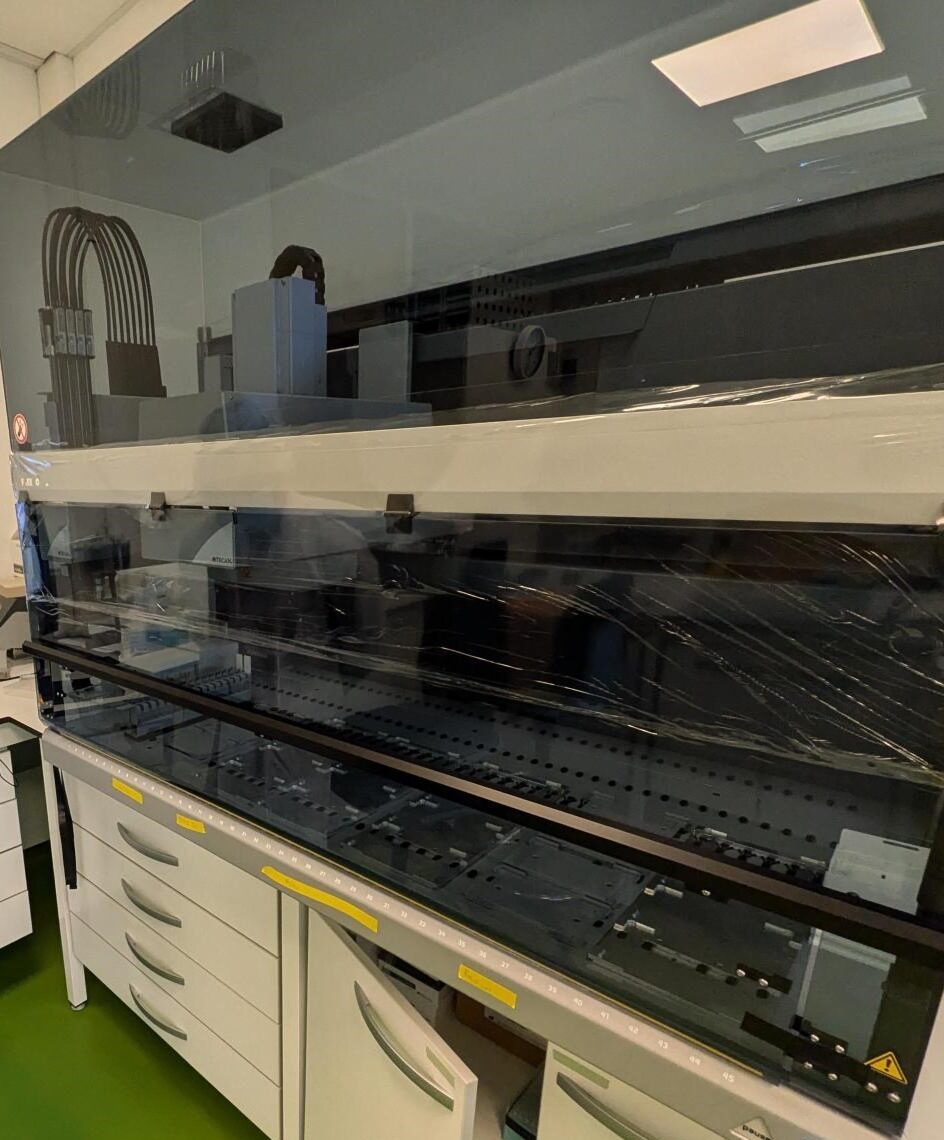
We understand the challenges of conducting high-throughput assays for dry AMD research, with significant risks and costs if assays are not performed well. With over a decade of experience in the human iPSC space, like you, we see the enormous value in human iPSCs for building better, more physiologically relevant models of human disease.
That’s why we offer our iPSC expertise to leading biopharma and research organizations globally. We’ve developed tried-and-tested workflows to offer custom assays for dry AMD research to fit your project needs. Our key bioassays include growth factor secretion, outerretinal barrier resistance, phagocytosis, immunolabelling, oxidative stress and cell viability.
Clients who work with Axol share our obsession with doing it once and doing it well. We prioritize quality control, and robust data reporting is always built-in as standard in our projects, to ensure there are no surprise challenges (or costs), maximizing project success. That gives you more confidence, time and resource to focus on your research to produce better human disease models for drug discovery and beyond.
Choose an axoServicesTM Dry AMD Assay project for:
Prioritization of quality and consistency
Open discussions with actual iPSC experts
Dependable, high-quality project outcomes
“By combining iPSC-derived RPE cells with chronic A2E stress followed by blue light illumination, we have created the first in vitro model that faithfully recapitulates key mechanisms involved in RPE atrophy associated with AMD.” Dr Florian Regent
We have created the first in vitro Dry AMD model
We have created the first in vitro model that recapitulates the key mechanisms involved in RPE atrophy associated with dry AMD. It achieves this by combining iPSC-derived RPE cells with chronic A2E stress followed by blue light illumination.
How the model works:
We have also identified a reference compound that protects RPE cells in our model and include it in all our customers’ projects to ensure that the stress induced on RPE cells is within a reversible range.
The Dry AMD model can be used for:
High-Throughput drug Screening campaigns (HTS)
High Content Imaging (HCI)
Hit/lead validation
Toxicity screening
Exploration of disease mechanisms
Measuring oxidative stress, pro-inflammatory cytokine release, and complement activation.
Studying the impact of genetics on disease progression and drug response.
Evaluating treatments on a genetically diverse range of AMD models (“Clinical Trial in a Dish”)
Bioassays
We offer a range of bioassays for dry AMD research and drug development, including growth factor secretion, outer retinal barrier resistance, phagocytosis, immunolabelling, oxidative stress and cell viability. We also offer custom assays to fit your needs.
Our capabilities are as follows:
Area
Name
Method
Endpoint
Reference
Retinal disorders
VEGF (growth factor) secretion
OD reading
VEGF concentration
RPE-VEGF
Retinal disorders
PEDF (growth factor) secretion
OD reading
PEDF concentration
RPE-PEDF
Retinal disorders
Outer retinal barrier resistance
Volt/Ohm meter
Resistance in Ohm/cm²
RPE-ORB
Retinal disorders
Phagocytosis assay
Bioparticles labeling
Normalized fluorescence
RPE-PHAG
Retinal disorders
mRNA expression of characterized markers
RT-qPCR
Relative expression level
RPE-RNA
Pigmentation
TYRP1 expression
Immunolabeling
Normalized fluorescence
RPE-TYRP1
Pigmentation
Melanin content
OD reading
Melanin concentration
RPE-MEL
Pigmentation
PMEL17 expression
Immunolabeling
Normalized fluorescence
RPE-PMEL17
Oxidative stress
Cellular oxidative stress
CellROXTM Staining
Normalized fluorescence
RPE-CRX
Oxidative stress
Mitochondrial Oxidative Stress
Immunolabeling
Normalized fluorescence
RPE-MSX
Identification
ZO1-expression
Immunolabeling
Cell population purity
RPE-ZO1
Identification
MITF expression
Immunolabeling
Cell population purity
RPE-MITF
Cell viability
Cell viability / survival
Calcein AM – EthD1
Living cells / dead cells
RPE-LCC
Apoptosis
RPE apoptosis
TUNEL staining
Normalized fluorescence
RPE-TUN
We recently presented details of the model at the Hanson Wade Dry-AMD conference. Download the poster here:
Step 1. Kick-off meeting with the Axol iPSC experts
Decades of experience in the room
Open, two-way communication
Rapid follow-up with competitive quote
Step 2. Custom cell assay projects
Flexible involvement in experimental design
In-house expertise to guide design and maximize project success
Custom assay capabilities to fit experimental needs
Step 3. Reporting and data sharing
Across the service project, all raw data is stored and lab notebooks are maintained in keeping with data management requirements
Full written report produced upon project completion with data-sharing meeting for full transparency
Step 4. Ongoing support
Continued communication and advice from iPSC experts
Ease the adaptation of cells into your experimental system
An open channel for future projects, collaborations and partnerships
Our approach to collaboration
What does the ideal outsourced scientific project look like? We see ourselves as collaborators, partners, bench scientists and project managers, here to work alongside you to support and accelerate your work. And just like you, we like getting the work done efficiently and effectively, with clear open communication throughout.
We also recognize the trust you put in us to support your work, remove the heavy lifting and ensure your timelines proceed on schedule. Ultimately, we’re all progressing towards the same mission so we would be honored to partner on your research and get closer to delivering better therapies for patients.
Our company operates through its stated values and behaviors of Performance, Accountability, Transparency, Collaboration, Diversity & Inclusion and Integrity. With a dedicated services team, we’re always on hand to support in any way we can.
We hope that we can be of service and welcome your enquiries:
Dry AMD? What can we do to help?
Search for cell type or disease model. For instance 'cardiomyocyte', 'microglial' or 'alzheimers'.